
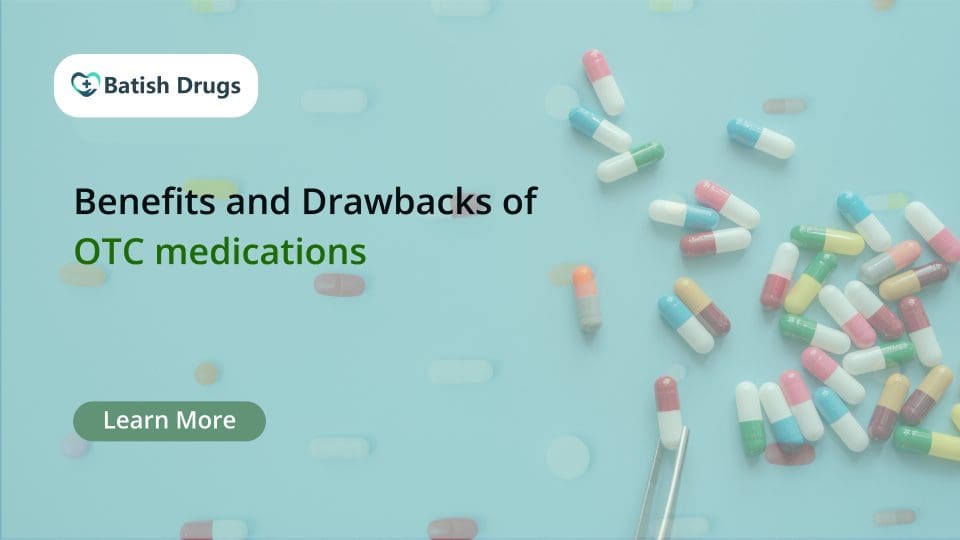
When you walk into a pharmacy, you’ll often see shelves lined with colorful boxes and bottles labeled as OTC Medications. These over-the-counter medicines promise quick relief from headaches, cold symptoms, minor aches, nausea, and more. But what exactly are OTC Medications? Why are they so popular? And are there any drawbacks you should be aware of?
At BATISH DRUGS PHARMACY, we believe it’s important to help our customers make informed decisions. In this comprehensive guide, we’ll explore the benefits and drawbacks of OTC Medications to help you decide when they’re the right choice—and when it’s better to see a healthcare professional.
What Are OTC Medications?
OTC Medications (short for over-the-counter medications) are drugs that can be purchased directly from a pharmacy or store without a doctor’s prescription. These include:
- OTC pain medication like ibuprofen or acetaminophen
- OTC cold medicine for symptoms like congestion, cough, or sore throat
- OTC supplements such as vitamins and minerals
- OTC nausea remedies like meclizine or ginger-based tablets
Since they’re available without a prescription, OTC Medications are an important part of self-care, allowing people to manage mild health issues quickly.
The Benefits of OTC Medications
1️⃣ Accessibility and Convenience
One of the main advantages of OTC Medications is how easily you can get them. At BATISH DRUGS PHARMACY, you can walk in anytime and pick up OTC products you need—without waiting for a doctor’s appointment. This convenience saves time and helps you address symptoms immediately.
For example, if you suddenly develop a headache at work, OTC pain medicine can help you get through the day.
2️⃣ Affordability
OTC Medications are often more budget-friendly compared to prescription drugs. Since you don’t have to pay for a doctor’s visit to get them, they can help reduce healthcare costs, especially for common problems like mild pain or seasonal allergies.
3️⃣ Wide Range of Choices
Today’s pharmacy OTC products include options for almost every minor ailment: from over-the-counter cold medicine to over-the-counter pain medication and OTC supplements to support your overall health. This range makes it easy for consumers to find products that fit their needs and preferences.
4️⃣ Empowerment and Self-Care
Being able to choose and use OTC Medications empowers people to take charge of their health. Simple issues like indigestion, a runny nose, or mild pain can be treated quickly, without medical intervention.
5️⃣ Trusted and Regulated
Many people don’t realize that OTC drugs are regulated by authorities like the FDA in the U.S. They must prove to be safe and effective when used as directed on the label. This means products like OTC nausea remedies, OTC cold medicine, and OTC pain medication go through safety evaluations before reaching your local pharmacy.
Drawbacks of OTC Medications
While OTC Medications offer many benefits, it’s important to understand their limitations and potential risks.
1️⃣ Risk of Misuse or Overuse
Since OTC Medications are easily available, some people may take them too frequently, or in higher doses than recommended. For example, overusing over the counter pain medication can damage the liver (with acetaminophen) or irritate the stomach (with NSAIDs like ibuprofen).
2️⃣ Masking Underlying Conditions
Using OTC products to relieve symptoms may hide more serious health problems. For instance, recurring headaches treated only with OTC pain medicine could be a sign of high blood pressure or another condition that needs medical attention.
3️⃣ Side Effects and Interactions
Even over the counter drugs can have side effects. OTC cold medicine may cause drowsiness, dry mouth, or increased heart rate. OTC supplements can interact with prescription medications—like vitamin K reducing the effect of blood thinners.
It’s always wise to speak to a pharmacist or healthcare provider before starting a new OTC medication, especially if you’re already on prescription drugs.
4️⃣ Not Suitable for Everyone
Some OTC Medications aren’t safe for pregnant women, young children, or people with chronic illnesses. For example, some OTC nausea medications may not be recommended for people with glaucoma.

When Should You Choose OTC Medications?
Here are a few scenarios where OTC Medications can be the right choice:
✅ Mild headache, muscle ache, or toothache → try an OTC pain medication
✅ Seasonal allergies → OTC drugs like antihistamines can help
✅ Minor upset stomach → certain OTC nausea remedies or antacids
✅ Common cold → OTC cold medicine for temporary relief
Remember: if symptoms persist longer than a few days or worsen, it’s best to consult a healthcare professional.
- How to Choose the Right OTC Medications
When buying OTC Medications at BATISH DRUGS PHARMACY, keep these tips in mind:
- Read the label carefully (active ingredients, dosage, warnings)
- Avoid combining products with the same active ingredient (to prevent overdose)
- Ask our pharmacists about possible interactions with your other medications
- Choose OTC products suited for your age and health condition
- The Role of Your Pharmacist
Your pharmacist isn’t just there to ring up your purchase—they’re trained to guide you:
- Explain how to use OTC pain medication safely
- Recommend the best OTC cold medicine based on your symptoms
- Check for drug interactions between OTC supplements and prescription meds
- Help select suitable pharmacy OTC products if you have chronic conditions
- Popular OTC Medications Categories at BATISH DRUGS PHARMACY
Here’s a look at some categories you’ll find at our pharmacy:
- OTC pain medicine: ibuprofen, acetaminophen, naproxen
- Over the counter cold medicine: decongestants, cough syrups, lozenges
- OTC nausea remedies: motion sickness tablets, ginger supplements
- OTC supplements: multivitamins, vitamin D, iron, probiotics
- OTC allergy medication: antihistamines and nasal sprays
- Over the Counter vs. Prescription Medications: Key Differences
- Prescription drugs require a doctor’s approval because they might need close monitoring or have higher risk of serious side effects.
- OTC Medications, when used correctly, are considered safe for most people.
However, “OTC over the counter” doesn’t mean risk-free—so responsible use is essential.
Final Thoughts: Are OTC Medications Right for You?
OTC Medications are a convenient and cost-effective way to manage many common health issues. They empower people to care for themselves, save time, and reduce healthcare costs.
Yet, like any medication, over the counter drugs have potential drawbacks: side effects, interactions, and the risk of misuse. That’s why it’s important to:
✅ Read labels carefully
✅ Use as directed
✅ Talk to your pharmacist if unsure
At BATISH DRUGS PHARMACY, we’re here to help you choose safe and effective OTC Medications that fit your needs.
Need Advice?
If you’re not sure which OTC products are right for you, visit BATISH DRUGS PHARMACY or call us today. Our expert pharmacists are ready to answer your questions about OTC pain medication, OTC supplements, and all other over the counter medicine.
Let’s make self-care safer, smarter, and more effective—together!